ROBOT WORKS / FIELD NOTES
Robots for one job at a time.
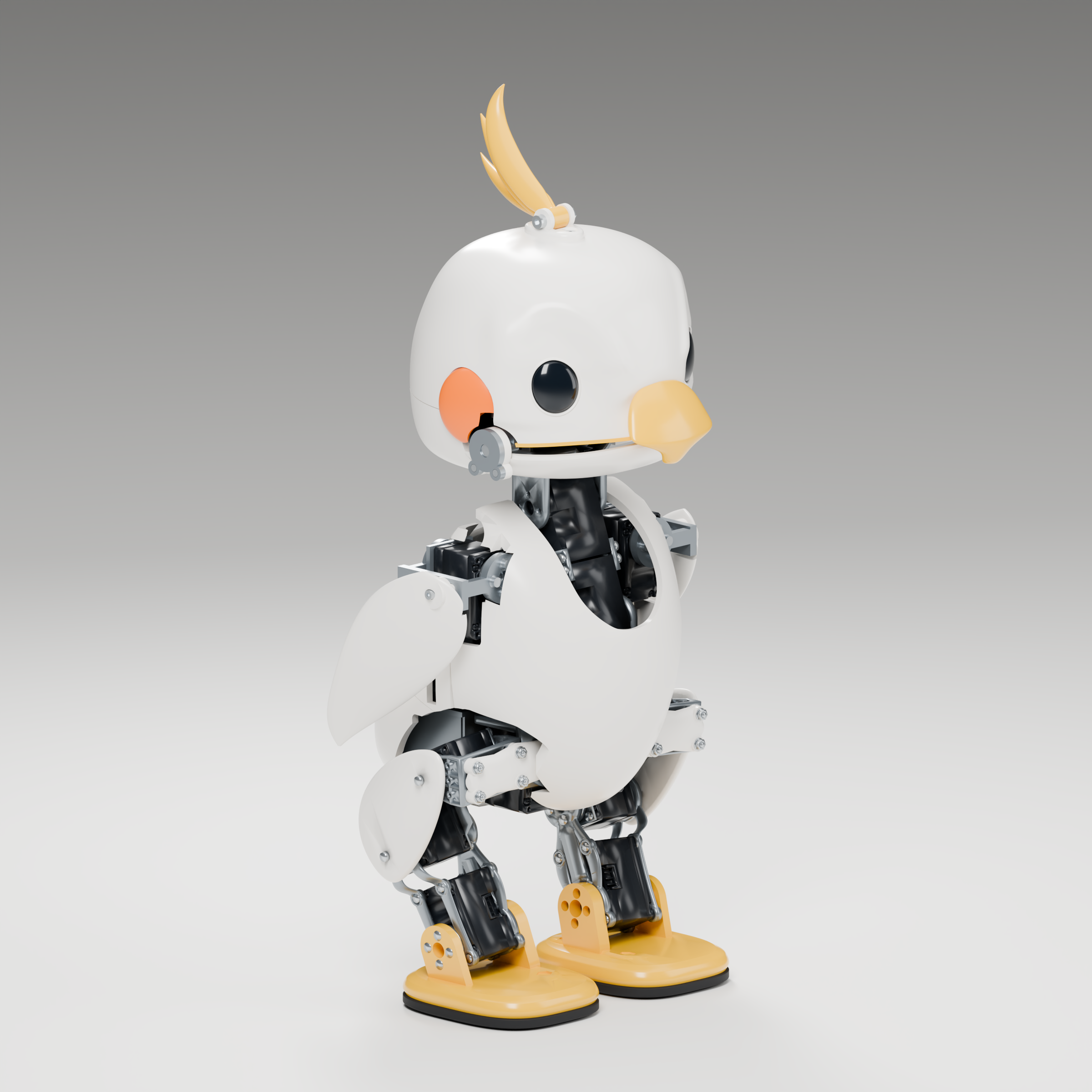
Small robots with recognizable animal forms and mechanisms made for particular tasks. The latest is Cockatiel: a bird-shaped robot I’m developing with GPT-6 Astra, working toward a physical prototype.
LATEST WORK / GPT-6 ASTRA
Cockatiel: a bird with something to do.
I want Cockatiel to walk on two legs and use its beak to pick up or move small objects. Its face and silhouette matter as much to me as the mechanisms inside.
These new outputs were produced with GPT-6 Astra: the mechanical design work, Blender renders, and illustrated assembly material. I supply the intended behavior and visual direction, then review the results as the design develops.
The current design brings the legs, wings, head and beak together in one assembly. The images show the mechanical model; walking and grasping still need physical validation.
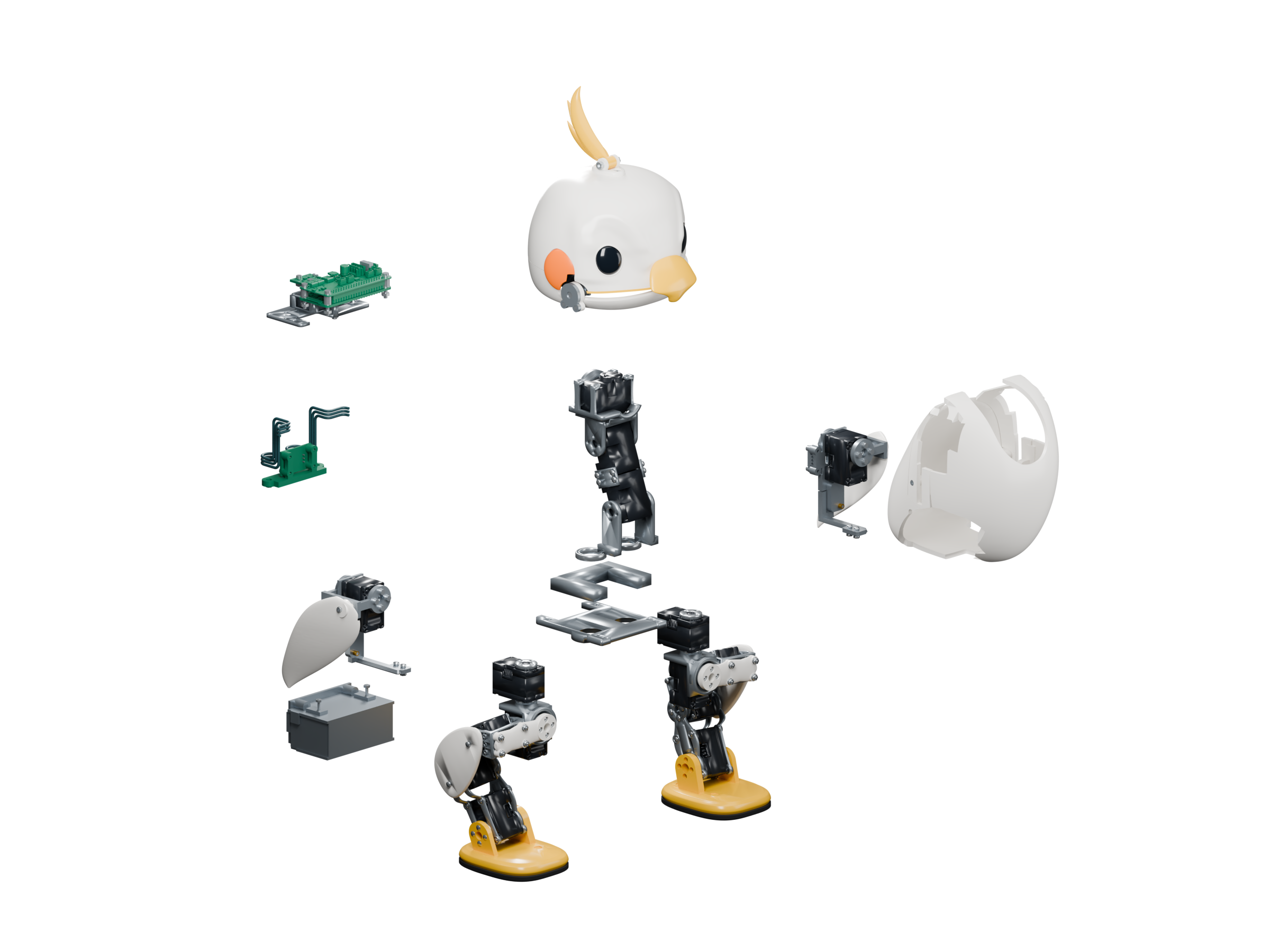
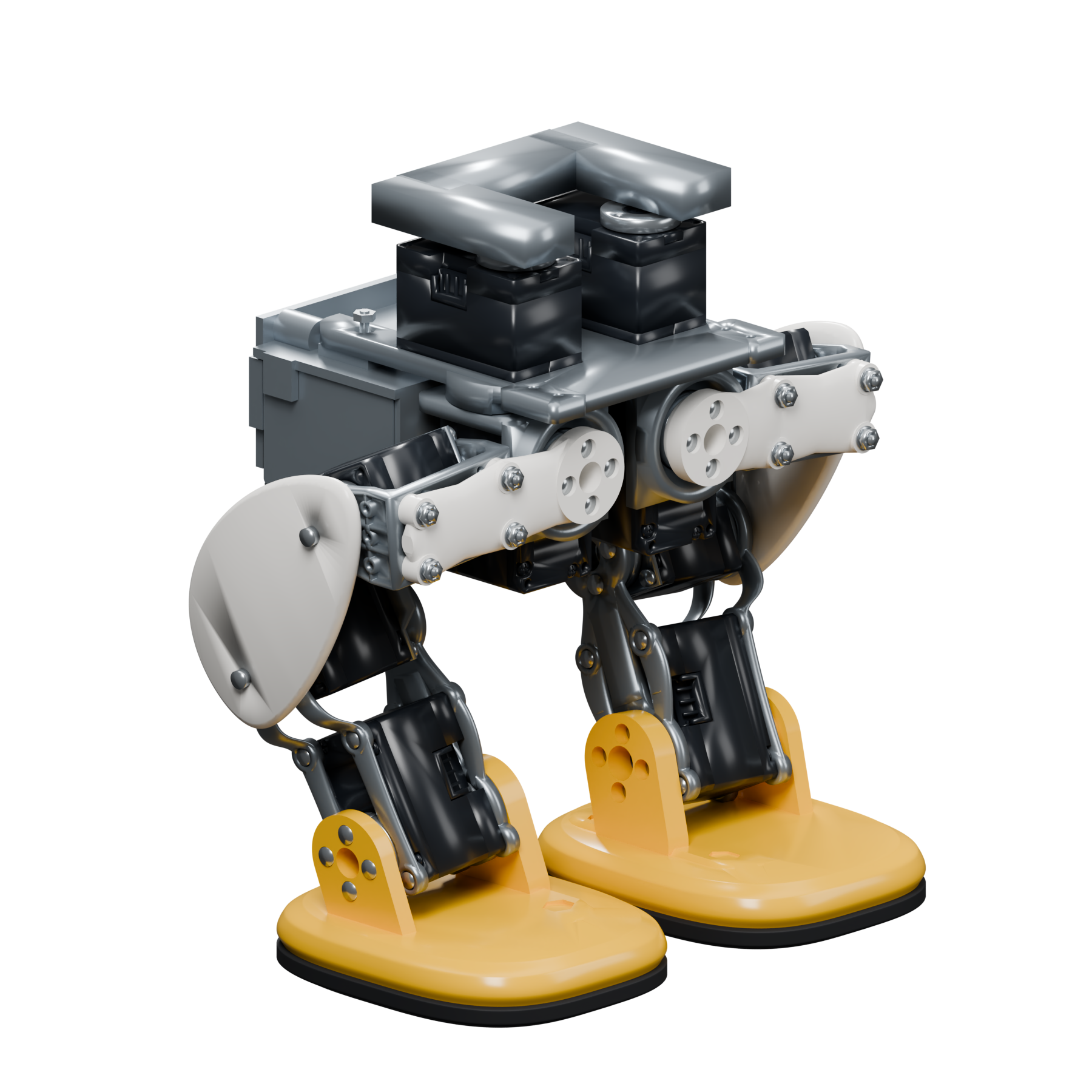
Start with the hardware.
I want to start testing while the exterior continues to change: first one motor, then a supported leg, then a bare two-leg chassis. Early prints and mounting interfaces can be replaced as the design improves.
The next step is physical testing. Power, loads, calibration and walking control still need work before this becomes a walking robot.
Talk roboticsEXPERIMENT 01 / BFL-1
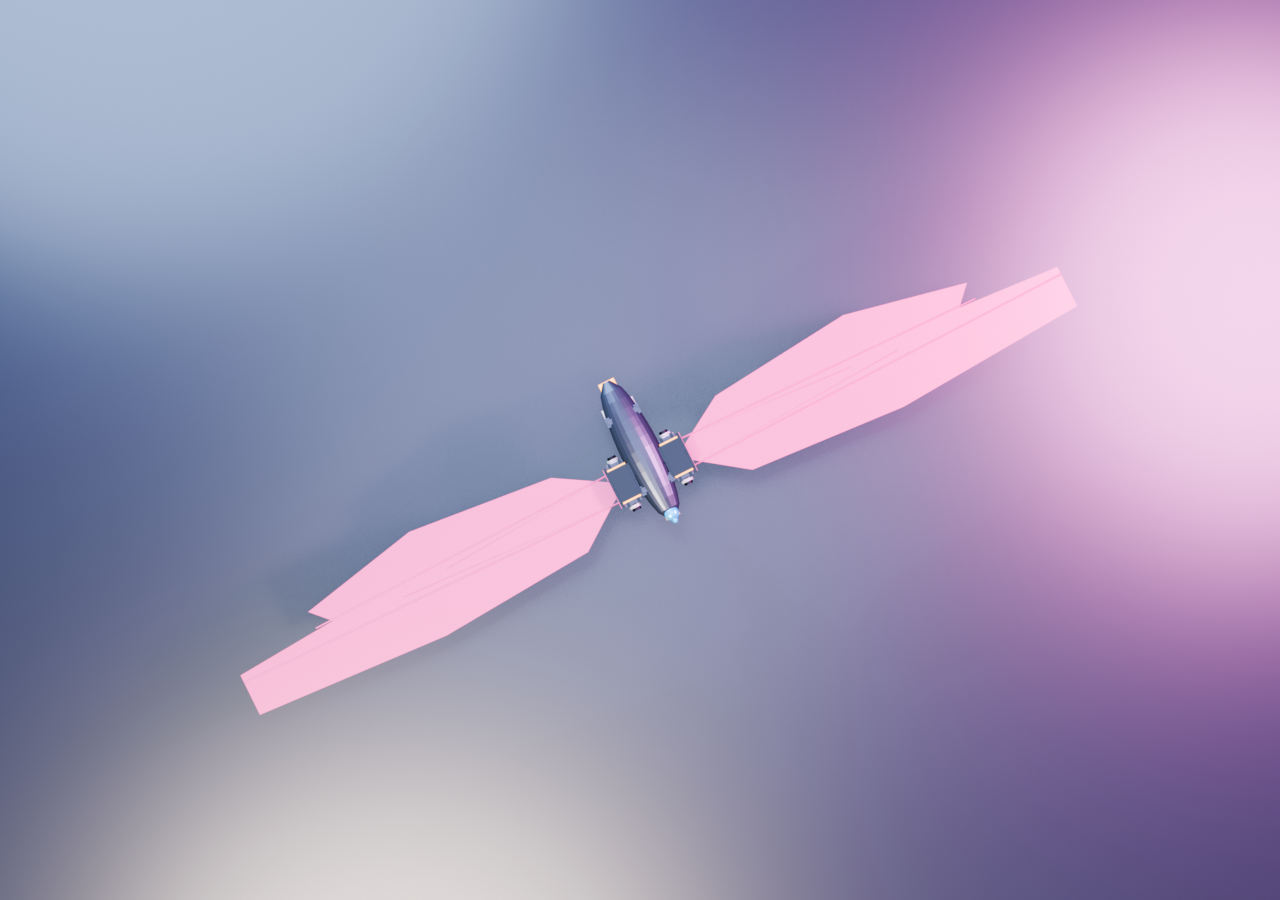
Designing a butterfly robot.
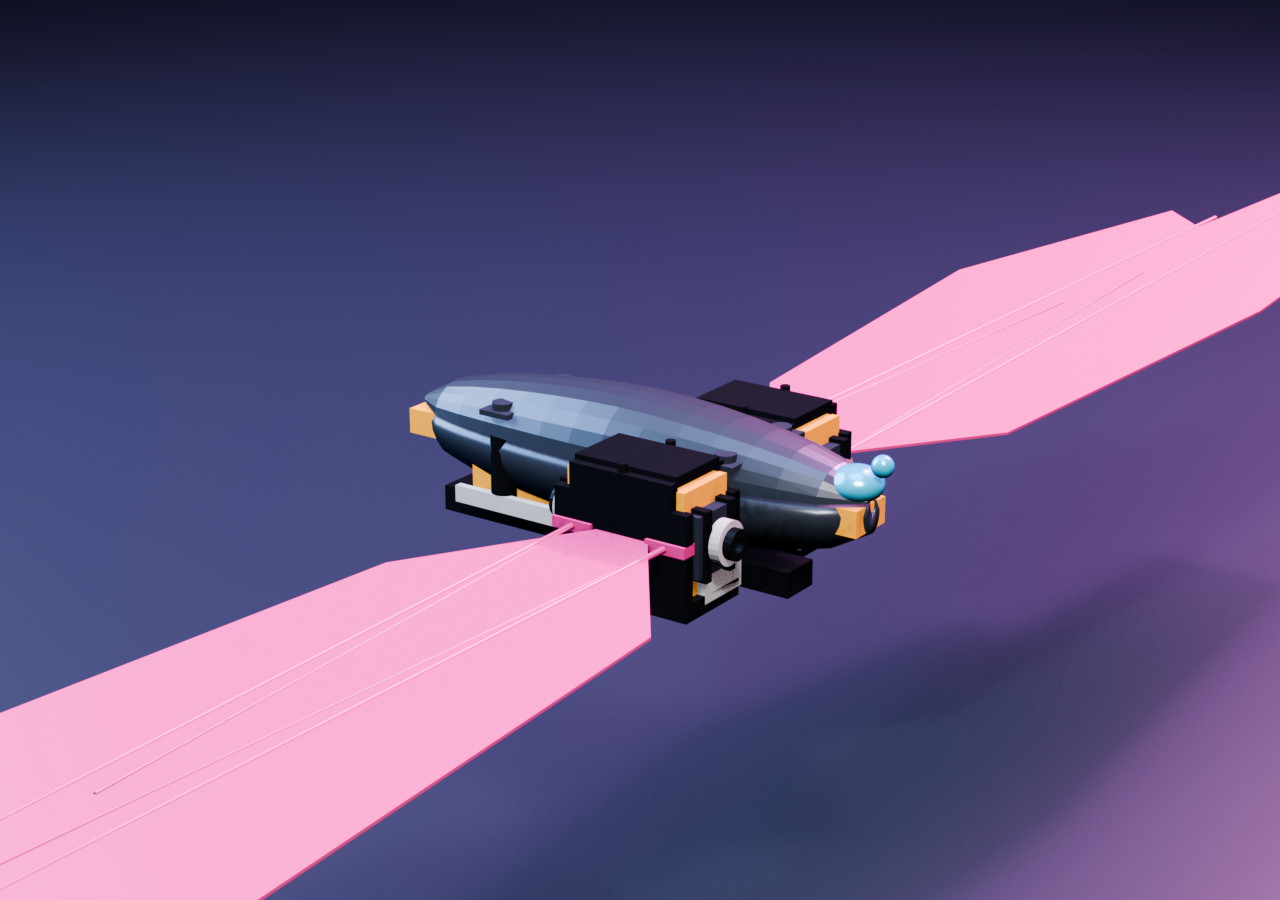
The prompt was deliberately ambitious: set up a small robot project using the engineering process already in the repository, and design a butterfly robot that actually flies.
Across repeated follow-ups, Luna turned that into a configuration-controlled engineering project. It created requirements and release gates, explored the wing mechanism, produced a parametric body and assembly, added a service cover, fastener features, actuator cradles, root shafts, bearing seats, spars, and wing membranes, then generated inspection renders and a prescribed wingbeat animation.
The work advanced to a coherent Revision B prototype candidate. The release system kept saying “not ready” wherever physical evidence was missing.
Current state
The model includes a shell, removable cover, mechanism interfaces, wing structure, assembly model, inspection views, a controlled build, and 165 BFL-specific passing tests.
Exact qualified actuators, procurement, first-article inspection, manufacturing release, calibrated CFD, and physical flight validation remain open. The robot is not yet ready to manufacture or test in flight.
From my perspective, the result is obviously still bad. It is a render and an engineering package for a robot that has never flown. I deliberately gave the task to GPT-5.6 Luna at max reasoning, the cheapest model in OpenAI’s current GPT-5.6 family.
Useful AI 3D capabilities only really began to emerge around April 2026. This feels like an early baseline. With better models, more tokens, and more iteration, I expect hardware design to start feeling like writing code with AI does now: say what you want, inspect the result, test it, and keep refining.
BFL-1 is the first entry here. I want to see how close we can get to simply describing a machine and having the engineering built around that request.
EXPERIMENT 02 / WORMBOT
Can an AI find the mechanical mistakes in its own robot?
Wormbot is a small segmented robot with six articulated joints, distributed electronics, batteries, rollers, and wire loops that have to survive the complete motion range.
The design became an experiment in verification. Numerical collision and tolerance gates caught many real problems, but they also produced reassuring green results while parts were unsupported, wiring was incomplete, and some assumptions only worked in one configuration.
The important change was giving the AI a better way to inspect what it had made: exact build geometry, part and assembly views, useful depth cues, identity colors, source-resolution detail tiles, continuous clearance checks, and independent criticism.


Current state
The earlier design was visibly cluttered. Some parts were not properly attached, some appeared to float, and parts of the assembly simply looked strange. The material improvement began with fidelity and inspectability: the renders showed the actual parts, separated them with distinct colors, and covered the part, its surrounding assembly, and the complete robot from multiple sides.
That improved review process found defects that the earlier checks had missed: twelve termination-board assemblies without a credible load path, wire curves without physical guides or strain relief, missing fixed electrical links and regulators, a nearly bottomed screw, washer edge breakout, and oblique contacts missed by a directional clearance test.
The current L6 revision is more compact. It models four rollers per segment, and the simulation now uses all 28 wheel contacts instead of simplified centreline contacts. The current evidence set contains nine whole-robot views, including opposed motion limits. Gross movement looks plausible and the controlled 60-pose sweep reports no unapproved intersections.
The large remaining problems are visible without a close-up: exposed flex cables, upright circuit boards, weak protection, unfinished service access, and several physical checks that simulation cannot close. An independent visual review rated L6 at roughly 3 out of 10. Wormbot remains an engineering prototype in simulation, not a build-ready robot.
The accompanying build note follows the steering decisions that made these defects visible and gives the measurements behind several of them.